Mavee Travel Guide occasionally includes affiliate links, meaning I may earn a small commission if you book or buy through them — at no extra cost to you. Every brand or service I recommend is one I genuinely trust, use, or truly believe will make your travel experience better.
East Africa is full of famous icons — Kilimanjaro, Serengeti, gorillas in Rwanda and Uganda — but the region’s real magic lives in quieter places: secret islands, remote waterfalls, volcanic lakes, forested plateaus, and sleepy villages where you feel like the only tourist in the room. I read the best travel reports and did extensive research, then stitched those findings into practical plans you can actually use, plus my travel resources, which include all the trusted and reliable companies I use and recommend.
Below you’ll find:
- A short list of can’t-miss hidden gems across East Africa (with why they’re special).
- Practical planning essentials (visas, vaccines, money, transport, safety).
- Responsible travel rules.
- THREE realistic 7-day itineraries geared to different tastes — all solo-female friendly.
- Packing, budgeting, and content ideas for creators.
Top Hidden Gems
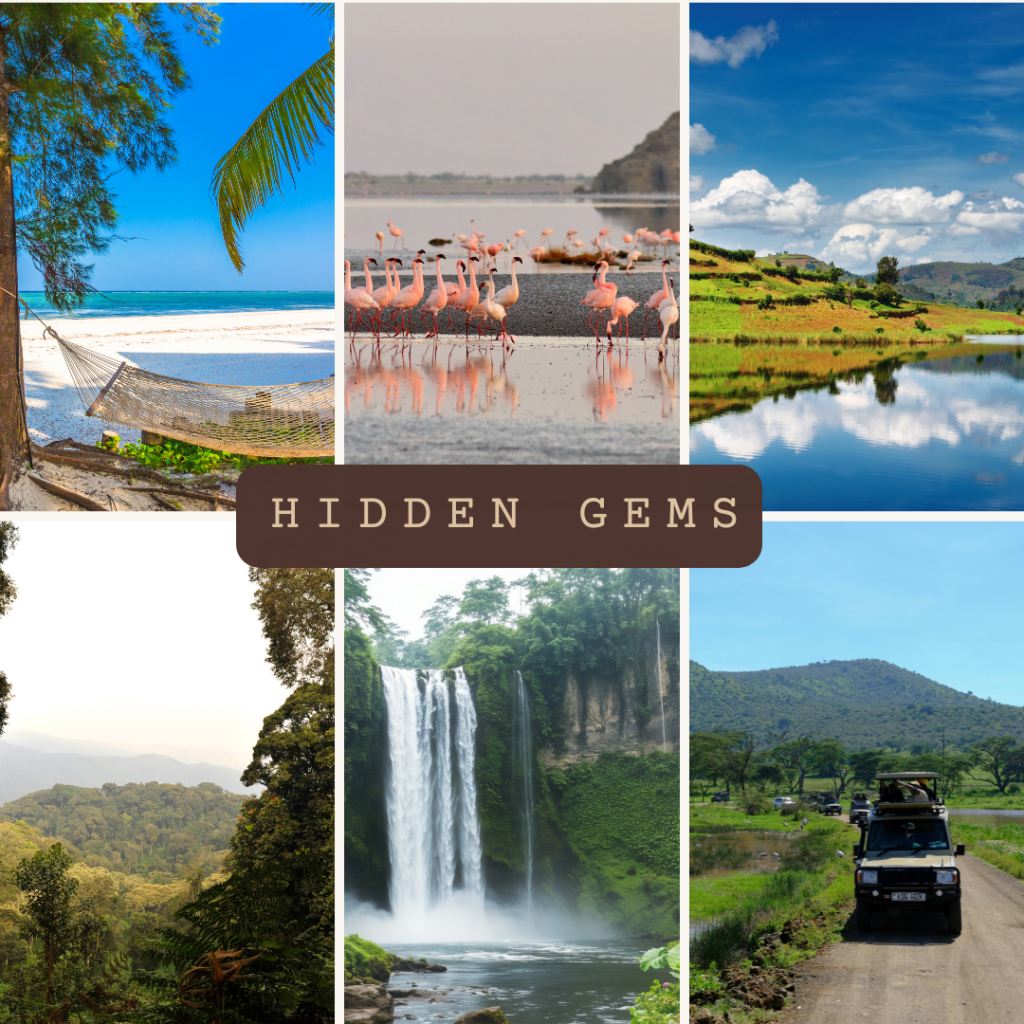
These are places savvy travelers and local guides keep whispering about:
- Rubondo Island, Tanzania (Lake Victoria) — island safaris, walking with chimps released into the wild, water safaris, and virtually no crowds. A true island-in-the-lake surprise.
- Lake Natron, northern Tanzania — surreal alkaline lake with flamingo breeding grounds and dramatic volcanic landscapes around Ol Doinyo Lengai. It’s prime for dramatic photos and lava-rock scenery.
- Sipi Falls & Mt. Elgon area, Uganda — tiered waterfalls, coffee farms, walking trails that feel personal and empty compared to mainstream parks. Great for hikes and cultural homestays.
- Lake Bunyonyi, Uganda — a quiet rift lake with 29 islands, kayaking, community-run guesthouses and a slow pace that’s perfect for reflection.
- Chyulu Hills, Kenya — rolling volcanic hills with remote trails, Maasai culture experiences, and sweeping views — often overlooked because it’s quieter than Amboseli or the Mara.
- Ruaha National Park, Tanzania — fewer tourists, huge elephant herds, dramatic landscapes — a great alternative to crowded parks.
- Usambara Mountains & Pangani Coast, Tanzania — emerald hills, colonial towns, and quiet beaches — very different from the busy tourist strip.
- Nyungwe Forest, Rwanda — old-growth forest with canopy walks and primate life, but much quieter than other parks if you time it right.
Each of these offers real space, fewer crowds, and strong local culture or wildlife encounters — which equals better photos and deeper stories.
Planning Essentials
Visas & Border Notes
- E-visas & regional rules vary — always check the official immigration site of the country you’ll enter. Tanzania and Uganda both operate e-visa systems; Rwanda and Kenya have their own rules and recent policy changes. For example, Kenya updated its eTA policy in 2025 to ease intra-African travel. Always confirm for your passport.
Vaccines & Health
- Yellow fever: Many East African countries require proof of vaccination. Check CDC or WHO country pages for up-to-date entry requirements before travel. Malaria prophylaxis advice depends on region (coastal & lowland areas higher risk). Book a travel clinic visit 6–8 weeks ahead.the
Best times to visit
- Wildlife season & migration: June–October is the classic high season (dry season/river crossings for the Great Migration in northern Serengeti/Maasai Mara). But many hidden gems are great year-round; rain makes some remote roads harder. Check local park access before you travel.
Money & Costs
- Cash is king in many rural spots. ATMs exist in major towns, but smaller villages require cash (local currency). Budget per day will vary: $30–70 for backpacker basics, $100–250 for comfortable mid-range, and $350+ for safari lodges. Plan for permits (gorilla permits, special park fees) and guide costs separately.
Insurance & Permits
- Travel insurance that covers medical evacuation and wildlife activities is non-negotiable. Certain activities (gorilla trekking, crater walks) require permits that must be pre-booked.
Local Transport
- Domestic flights save time between countries or to remote parks (e.g., flights to Rubondo, Ruaha).
- Overland buses, shuttle services (Baz Bus style in some regions), and private transfers are common. For hidden gems, expect private transfers or local 4x4s.
- Hire local operators with good reviews — they know road conditions, secure lodges, and female-friendly guides. Check my travel resources for trusted and reliable companies.
Solo-Female Travel: Safety & Practical Tips

This is important and I’ll keep it blunt: East Africa is not “dangerous” in a blanket way — but you’ll have best trips if you travel like a prepared solo woman. Practical measures from operator and solo-traveler reports:
- Book vetted accommodation. (Check my travel resources for trusted accommodation companies)
- Avoid walking alone at night in unfamiliar towns; use hotel or operator transfers for late arrivals.
- Dress respectfully where local customs are conservative (towns, rural areas), especially outside beach areas.
- Share your itinerary and set regular check-ins with a trusted contact back home.
- Trust local guides — join small group activities if you want company; they’re safe and social.
Solo female travel is absolutely doable here — just be strategic. The best way to avoid stress is planning the first 24–48 hours well and booking trusted transfers.
Local Ethics I Follow:
Support local businesses (community lodges, family-run camps). Many hidden-gem areas are sustained by small enterprises.
Respect wildlife rules (no selfies with animals, keep distance). Your guide should brief you — listen.
Avoid single-use plastics where possible; pack a refillable water bottle and purification tablets.
Ask before photographing people — always better to ask and get consent. Tip local guides fairly.
3 Countries & 7-Day Itinerary
I made three compact itineraries focused on:
1. Uganda & Rwanda hidden gems (best for short distances + big variety),
2. Northern Tanzania offbeat loop (volcanic lakes + bush)
3. Coastal Kenya & Chyulu Hills (island + hills + culture). Each is solo-female friendly, realistic, and built for travel-makers who want less crowd, more story.
ITINERARY 1
UGANDA + RWANDA: Waterfalls, Lakes & Forests

Day 0 — Arrive Kigali or Entebbe
Fly into Kigali (Rwanda) or Entebbe (Uganda). Overnight in the city; buy local SIM and top up cash.
Day 1 — Travel to Sipi Falls area (eastern Uganda)
Drive to Sipi Falls / Kapchorwa region (or take a domestic shuttle). Afternoon coffee farm visit and sunset at the viewpoint. Overnight in a guesthouse or coffee farm lodge.
Day 2 — Hike Sipi Falls + waterfall walk
Morning guided hike to the falls, lunch with a local family (ask for a community visit). Learn about coffee processing. Overnight in Sipi.
Day 3 — Mbale to Lake Bunyonyi (long drive, plan stops)
Drive toward southwestern Uganda (keep a travel day buffer). Arrive at Lake Bunyonyi late afternoon — kayaking and island-hop. Overnight in a lakeside banda or guesthouse.
Day 4 — Lake Bunyonyi: chill, kayak, community visit
Day for slow travel — hire a canoe, visit islands, meet local women’s cooperatives. Perfect for photos and solo reflection.
Day 5 — Transfer to Bwindi / Mgahinga region (gorilla/birding)
Drive to Bwindi Impenetrable Forest or Mgahinga Gorilla National Park. If gorilla permits are in your plan, pre-book—permits often sell out. If not doing gorillas, opt for community walks, birding and Batwa cultural experiences.
Day 6 — Optional gorilla trek or forest walks
Early morning trek (if you have permit). Alternative: canopy walks or nature hikes. Overnight near park. (Note: gorilla trekking requires permits and is expensive; book months ahead.)
Day 7 — Return to Entebbe / Kigali for departure
Long drive back (or short internal flight if available). Buffer a rest day before international flight.
Why pick this: compact logistics, dramatic waterfalls and lakes, community tourism, and strong solo-female infrastructure (guesthouses + day trips).
ITINERARY 2
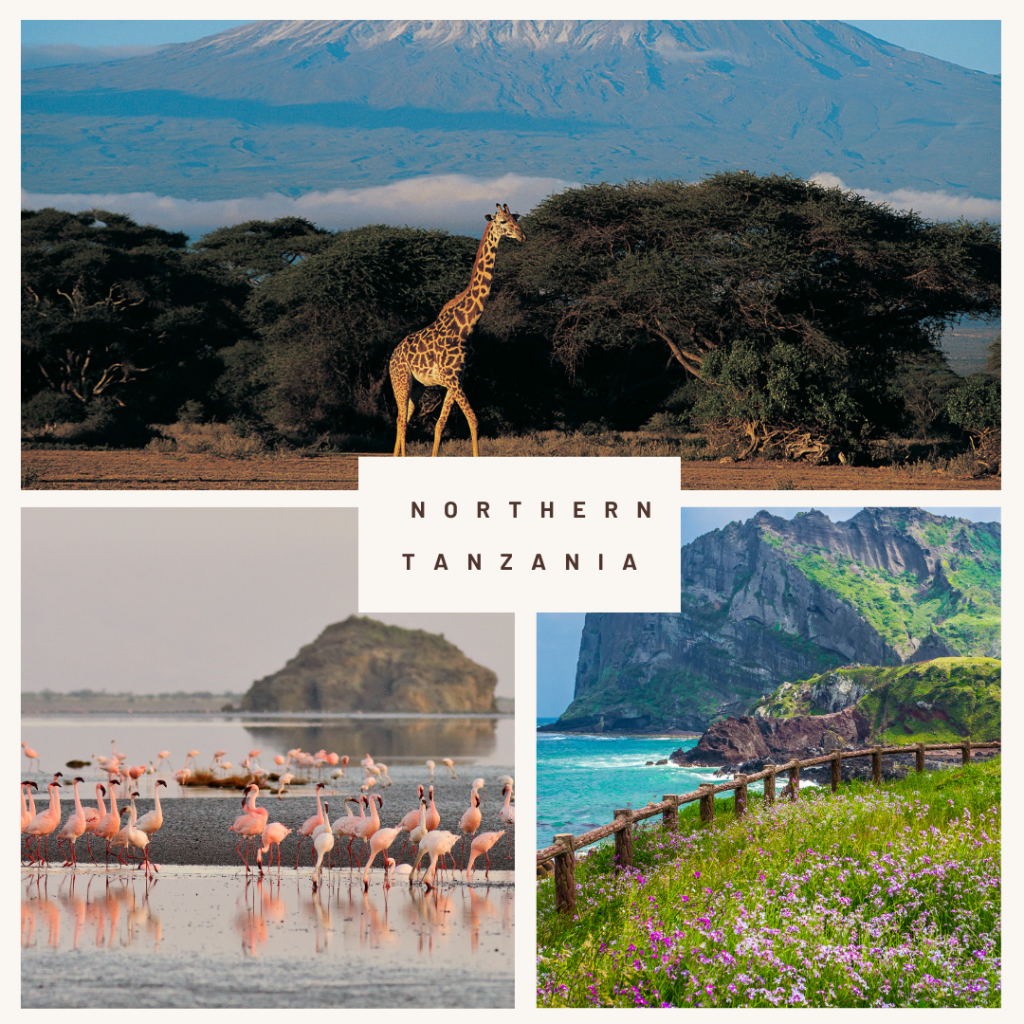
NORTHERN TANZANIA: Volcanic Lakes & Empty Wilds
Day 0 — Arrive Arusha
Fly to Kilimanjaro or Arusha; prep with local SIM, last-minute supplies.
Day 1 — Arusha to Lake Natron (overnight)
Drive north to Lake Natron. Sunset photography at the lake; flamingo habitats in certain seasons. Stay in a simple eco-lodge.
Day 2 — Day trip to Ol Doinyo Lengai & crater views
Morning crater rim or surrounding exploration (local guide). This volcano is sacred to the Maasai and offers otherworldly landscapes. Overnight near the lake.
Day 3 — Lake Eyasi & Hadza community visit
Travel south to Lake Eyasi for cultural visits (Hadza hunter-gatherer communities) and last-light birding. Overnight at a community lodge or camp.
Day 4 — Transfer to Rubondo Island (Lake Victoria)
Long travel day: return toward Mwanza, then transfer (boat + road) to Rubondo Island Camp. Expect a remote lodge vibe — walking safaris, boat trips, and chimps in semi-wild enclosures.
Day 5 — Exploring Rubondo: forest walks & water safaris
Full day exploring the island — birding, walking, boat trips. Peace and quiet guaranteed.
Day 6 — Return to Mwanza / fly to Dar or Arusha
Buffer travel day; rest and city food. Overnight en route.
Day 7 — Optional short safari or flight home
If you have time, short game drive in nearby reserve; otherwise fly home from Mwanza or connect via Dar es Salaam.
Why pick this: otherworldly landscapes (Natron, Ol Doinyo), cultural experiences, remote island safari at Rubondo, away from the crowds. Great for photographers and nature lovers.
ITINERARY 3
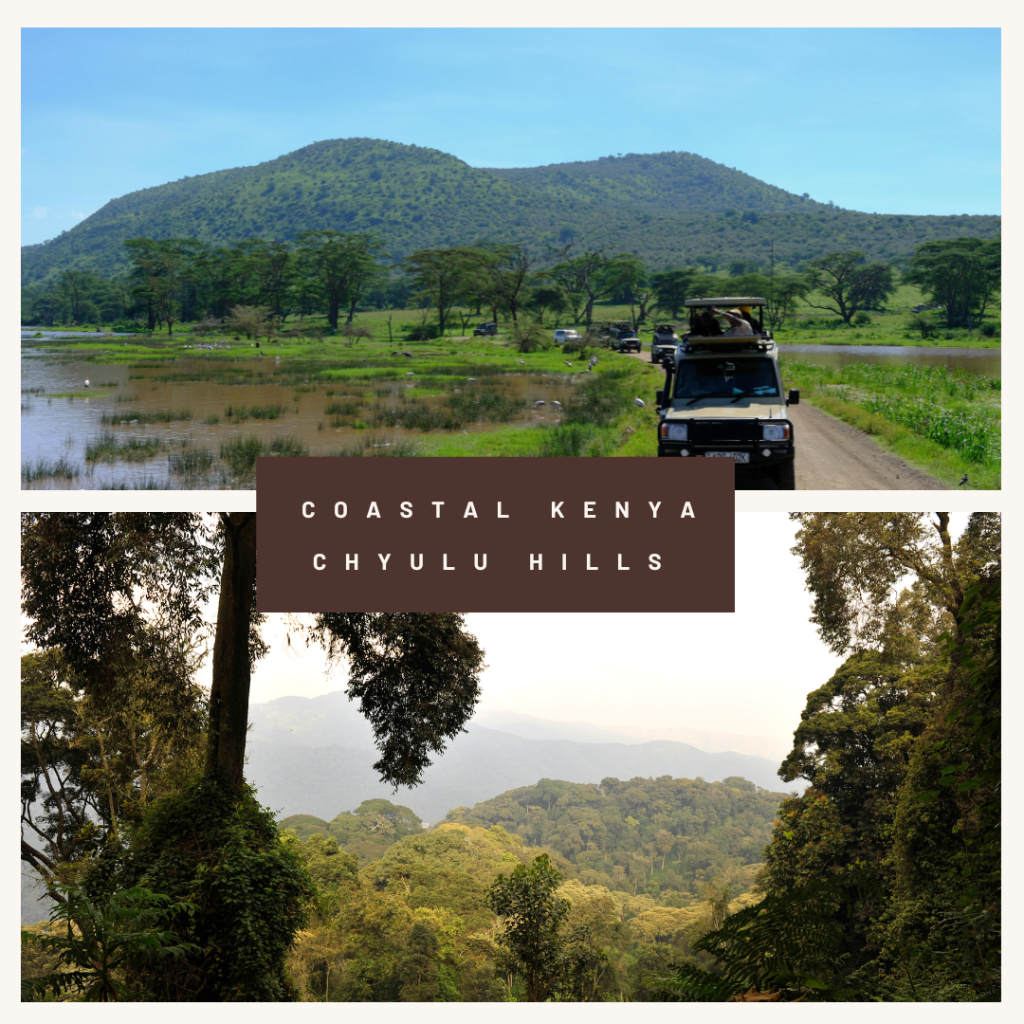
COASTAL KENYA + CHYULU HILLS: Beach, Culture & Volcano Views
Day 0 — Arrive Mombasa or Nairobi + transfer to coast
Fly into Mombasa (or Nairobi + domestic to the coast). Overnight by the shore.
Day 1 — Lamu (island calm) or Diani
Take the ferry/flight to Lamu Old Town for Swahili architecture and barefoot island life — or choose Diani for beach activities. Overnight in a small boutique guesthouse.
Day 2 — Explore Lamu / Local culture
Walk the alleys, visit dhow builders, try Swahili food. Use a local guide for community tours.
Day 3 — Travel inland to Chyulu Hills (via Mombasa to Tsavo area / Amboseli side)
Head toward Chyulu Hills region (closer to Amboseli/Tsavo corridors). Stay in a community camp or private camp.
Day 4 — Walks in Chyulu Hills & Maasai experience
Guided walks over volcanic grasslands, panoramic views and Maasai cultural visits. Chyulu is very quiet and beautiful.
Day 5 — Day safari in nearby reserve (Tsavo East/West) or local conservancy
Small conservancy drives are less crowded than national parks — good for solo travelers wanting a private feel.
Day 6 — Back to the coast: beach afternoon & sunset
Recharge at the beach. Treat yourself to a spa or a dhow sunset cruise.
Day 7 — Leisure day + fly home
Last slow morning, pack, and depart.
Why pick this: beach + culture + offbeat hills. Fewer tourists in Chyulu and Lamu than classic Maasai Mara seasons — a calm combo.
Realities To Plan For (road times, connectivity, and costs)
Budget for a guide. Local guides not only show you better wildlife/culture but also improve safety and experience quality.
Expect long transfers. Hidden gems mean fewer flights and more driving. Build buffer days and accept that some travel days will be long.
Connectivity is patchy in remote areas. Buy a local SIM (Vodacom, Safaricom, MTN, depending on the country) and carry an offline map.
Book big permits in advance. Gorilla permits, special conservancy permits, or certain island lodge slots sell out.
Packing List
Essentials plus small comfort items that make solo travel smoother:
- Passport + copies, printed visas/permits.
- Local SIM & power bank (portable charger).
- Quick-dry clothes, light layers (mornings can be cold), sun hat.
- Sturdy hiking shoes + sandals.
- Basic first-aid, malaria meds (if prescribed), water purification tablets.
- Reusable water bottle, headlamp, dry bag for boat days.
- A small money belt & a daypack with lock.
- Lightweight scarf/shawl (for modesty in conservative towns, sun protection).
- Camera + neutral clothes for photos (don’t show expensive bling).
Budget Snapshot
- Backpacker / budget: $30–70/day (local transport, basic guesthouses).
- Comfort / mid-range: $100–250/day (better lodges, local flights).
- Safari/lodge heavy: $300–800+/day (private lodges, guides, permits).
Remember: remote lodges and flights bump costs quickly and also set aside extra cash just in case there’s an unplanned price hike.
Content ideas (for creators & storytellers)
- “Sunrise at Lake Natron” — short cinematic timelapse + local story about the Maasai.
- “A day at Sipi Falls” — local coffee farmer profile + waterfall hike B-roll.
- “Lake Bunyonyi islands” — slow reels of canoeing, cooperative craft markets, and sunrise shots.
- Small “how I prepared” mini posts on health, vaccines, and permits — very saveable content.
Hidden-gem travel in East Africa is about swapping crowds for quiet, swapping predictable safaris for the kind of stories you’ll tell forever. It takes slightly more planning, a few more transfers, and a respect for local rhythms — but you’ll get so much more in return: space, authenticity, and memories that feel like yours alone.
Travel Resources
Accommodation:
Bookings and Errands: Reliable and trusted for Apartments, Car Rentals and Errand Services across Nigeria, Kenya, South Africa, and Ghana.
Hostelworld: Trusted for Hostels across Africa countries.
Booking.com: Trusted for Hotels, Apartments and Resorts across Africa.
Flights:
Aviasales: is my go-to for cheap flights. It’s a smart flight search engine that scans hundreds of airlines and agencies in one place, lets you compare flexible dates to find the lowest fares, and even sets price alerts so you know when ticket costs drop — perfect if you want to travel smarter and save money.
Transfers & Airport Services:
DiscoverCars: It scans hundreds of rental agencies worldwide, shows competitive prices and coverage options in one place.
Welcome Pickups: Start your trip stress-free with a friendly driver waiting for you at the airport.
GetRentacar : lets you book exact cars from local owners and rental companies worldwide, often at up to 50% off.
Travel Insurance
VisitorsCoverage : It lets you compare trusted insurance plans in one place, choose coverage that fits your trip and budget, and buy easily online.
Insubuy: Your go-to for comparing travel insurance plans, making it easy to find coverage that fits your trip and budget.
Tours Companies
GetYourGuide: Great for last-minute activities and flexible tickets, making it easy to plan on the go.
Viator: Perfect for booking unique tours and experiences, especially if you want local guides who know the hidden gems.
Expedia: Perfect for booking everything in one spot—flights, hotels, cars, even activities.


Leave a Reply